Case study 02
Research and technical evaluation
BigCommerce and Acumatica Integration
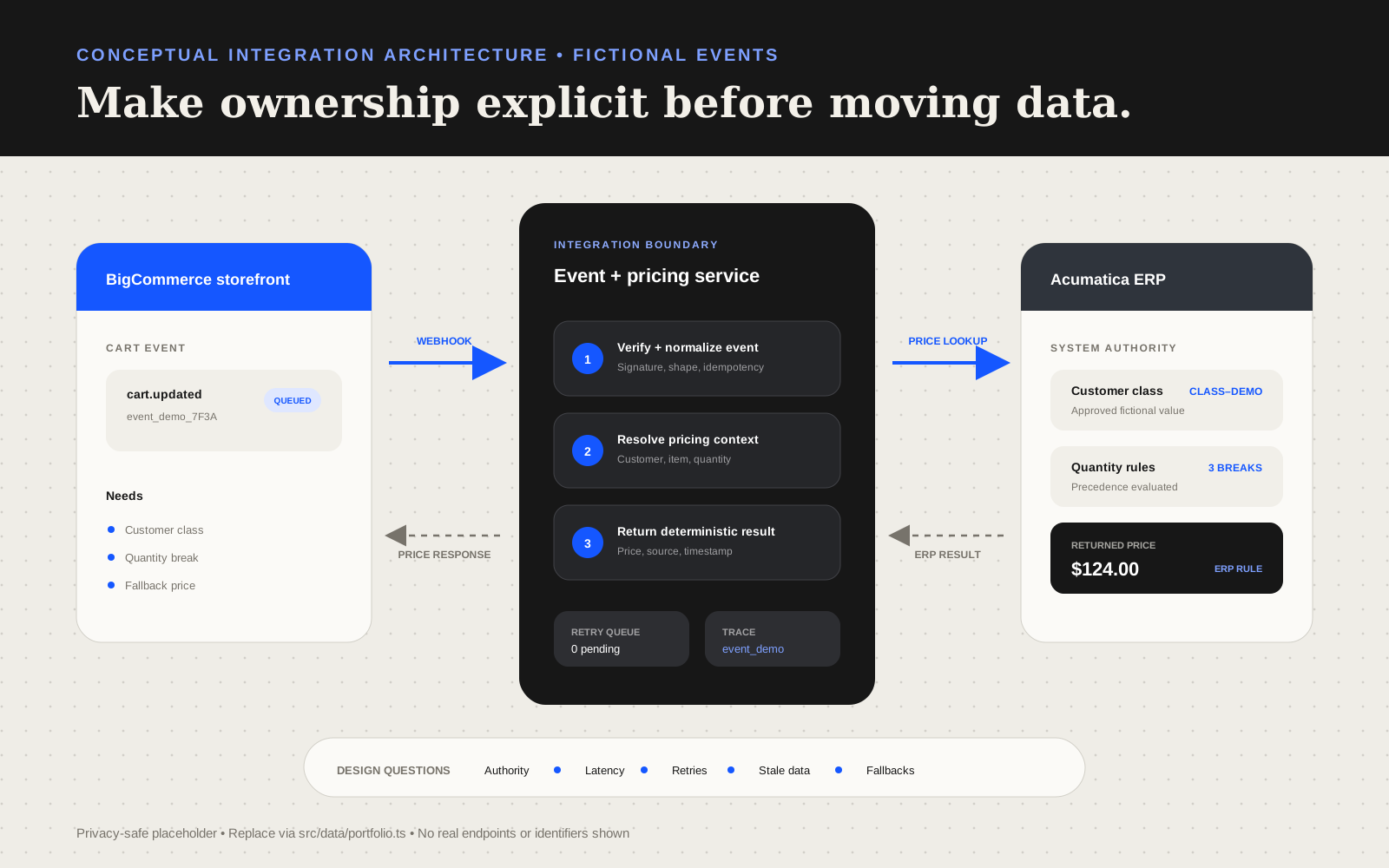
A technical evaluation of cart events, customer-class pricing, quantity breaks, and the boundary between storefront responsiveness and ERP authority.
01 · Overview
Business context first, followed by the implementation choices that made the technical work meaningful.
The challenge
The storefront needs timely pricing while the ERP holds customer and quantity-dependent rules. Any integration approach must account for API limits, event timing, failures, and differences between the two systems' pricing models.
Ace’s role
Technical researcher and project lead evaluating platform APIs, pricing responsibilities, webhook-based approaches, and feasible synchronization patterns.
Responsibilities
- Research BigCommerce and Acumatica API capabilities and constraints.
- Map customer-class and quantity-break requirements across both systems.
- Document architectural tradeoffs, failure modes, and evaluation findings.
02 · The challenge
Constraints & risks
- 01Cart webhooks are event-driven and may not fit every synchronous pricing decision.
- 02Customer-class and quantity-break models differ across platform boundaries.
- 03Retries, partial failures, API limits, and stale data must be considered explicitly.
Approach
- 01Start with an ownership map for customer, product, price, and order data.
- 02Evaluate synchronous lookup, scheduled synchronization, and hybrid patterns.
- 03Use failure scenarios to assess whether each option can degrade safely.
03 · Key technical decisions
Important choices, made visible.
Establish system authority
Define which platform owns each piece of data before choosing webhook or synchronization behavior.
Separate event transport from price logic
A webhook can signal a change, but the pricing contract still needs deterministic inputs, precedence, and fallback behavior.
Design for replay
Treat retries and idempotency as core requirements so transient failures do not duplicate or corrupt state.
04 · What I built
Implementation highlights
- Integration architecture and pricing-synchronization research.
- Customer-class and quantity-break requirement mapping.
- API capability and constraint analysis.
- Failure-mode, retry, and data-ownership evaluation.
Testing & validation
- Architecture walkthroughs using representative pricing and cart scenarios.
- Event-sequence reviews for updates, retries, and stale-data risks.
- Feasibility assessment against the required pricing scenarios.
Outcome / current status
This work represents research and technical evaluation. Middleware and webhook implementation were handled separately, and no production deployment or business impact is claimed.
Tech stack
- BigCommerce
- Acumatica 2022 R2
- REST API evaluation
- Webhook architecture evaluation
- JSON